Quebec, Canada Duplessis County
Everett Property
Overview
The Everett property is recognized by the USGS and the Quebec Geological Sciences Service as the host of one of the most significant hard-rock ilmenite (FeTiO3) oxide bodies in the world, alongside producing deposits at Lac Tio, Quebec (Rio Tinto Fer et Titane Inc.) and Tellnes, Norway (Kronos Worldwide Inc.).
Situated near the Lac Tio Operation of RTIT Québec, which is the largest solid ilmenite deposit in the world. RTIT Quebec supplies approximately 19% of the global high-grade titanium dioxide feedstock.



Critical Minerals Contained
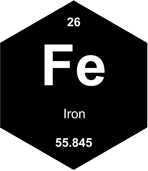
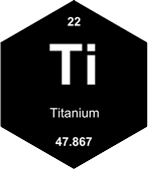
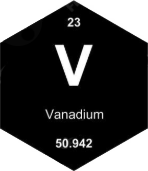
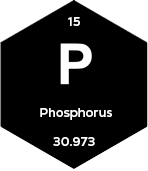
Igneous Phosphate (Apatite)
Ilmenite
containing

History of Everett Deposit
1948 - 1967
Everett ilmenite-apatite oxide body discovered by Dr. Everett J. Lees
First work on the property completed with 12 diamond drill holes, totaling 4,527 feet
Gulf Titanium (later Romaine River Titanium) completes 18 diamond drill holes, totaling 1,500 feet
1968 - 2003
Engineering report completed with historical mineral resource estimate
Historical resource based on shallow drilling only and restricted to Northern portion of oxide body
2 bulk samples and 5 significant metallurgical programs conducted (all positive results), and an engineering scoping study performed
2004 – Present
Verification work based on 67 sample sites, with 2 drill holes (134 core samples) to confirm uniform distribution of grades
Samples averaged 13.7% TiO2, 22.0% Fe and 3.1% P205 across entire oxide body
Locations of certain metallurgical samples, historical drill collars and test pits verified

Historical Exploration
Between 1950 and 1968, the oxide body was tested using 34 diamond drill holes and two bulk sample sites, which defined a significant historical mineral resource (Lees, 1974)
Later, 71 surface sample sites were tested in 2008 to confirm a uniform distribution of grades (Hurtubise, 2009)
Confirmation sampling and surveying were conducted in 2023 (Davy, 2023)
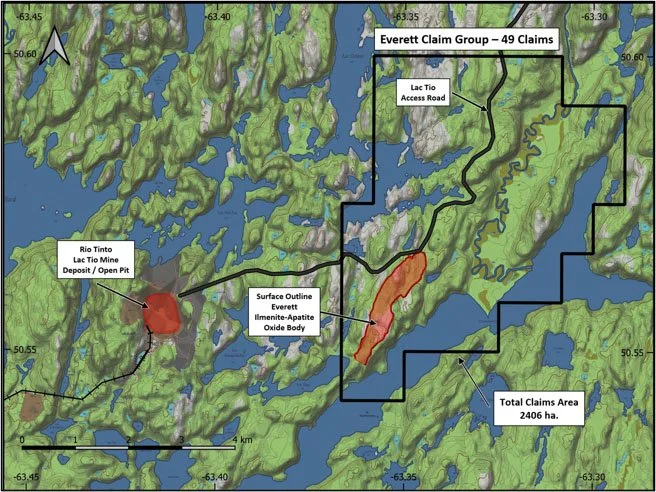
49 mineral tenures, covering 2,406 ha (5,946 acres)
Recognized by USGS as one of world’s largest hard rock ilmenite deposits
Everett oxide body – ilmenite – apatite crops out in area 200 - 400m wide by 3.5 km long
Historical Mineral Resource Estimate⁽¹⁾
Project has 34 drill holes to date, significant TiO2 intercepts including:
13.04% over 120 m, 11.22% over 120 m, 10.65% over 120 m (1951 drilling)⁽¹⁾
15.25% over 32 m, 14.40% over 33 m, 12.45% over 38 m (1968 drilling)⁽¹⁾
An Engineering Report by Lees (1972) cited a historical resource of 234 million tonnes of 10.8% TiO2, 17.9% Fe, and 2.8 % P2O5(1) based on both the 1950s and 1968 drilling programs.
The 1968 program comprised more definitive drilling and assaying of the northern extremity of the Everett oxide body. It defined a separate 340 m strike length of that historical resource (1/10th of the surface oxide exposure length) of the Everett oxide body of 50.8 million tonnes of 14.1% TiO2, 23.3% Fe, and 2.8% P2O5(1) within the larger tonnage reported*
* These “resources” are historical in nature and should not be relied upon, neither treated as current estimate. It is unlikely they conform to current NI 43-101 requirements or follow CIM Definition Standards, and they have not been verified to determine their relevance or reliability. Originally reported in long tons as 230 million long tons with a grade of 10.8% TiO2, 17.9% Fe and 2.8 % P2O5, it is here converted to 234 million metric tonnes with a grade of 10.8% TiO2, 17.9% Fe and 2.8 % P2O5. Similarly, the 50 million long tons are converted to 50.8 million tonnes. These historical “resources” are reported without any specific categories, which is not conform to current NI 43-101 requirements, and any comparison is not a valid comparison. A qualified person (QP) has not done sufficient work to classify the estimate as current, and the Company is not treating the historical estimate as a current mineral resource.” Results are presented for exploration targeting only.
1) Source: Lees, J. Everett, 1972, Engineering Report on Gulf Titanium Ltd., GM58981

Location, Access and Infrastructure
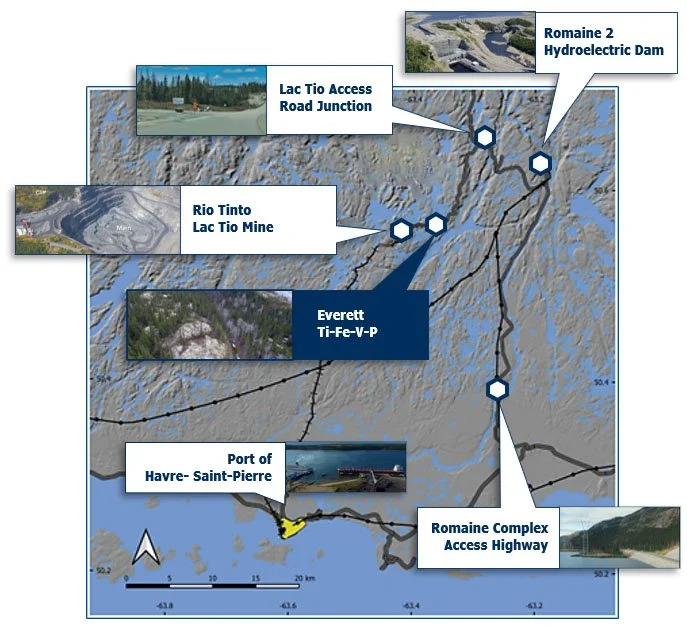
Located 40 km from port city of Havre St. Pierre, Quebec
3 km east of the world's largest hard-rock ilmenite deposit, Lac Tio owned by Rio Tinto
Lac Tio supplies 19% of global titanium dioxide feedstock supply
Lac Tio production is crushed on site, carried by rail and shipped to Rio Tinto’s processing facility in Sorel Tracy
Accessible year-round via 90 km of all-season road and highway
Proximal to the Romaine 2 Hydroelectric dam, providing low-cost power
Geology
Everett oxide body is a cumulate igneous layer that dips southeastward and comprises a massive ilmenite-apatite gabbronorite
Oxide body forms an NNE-SSW trending ridge. Semi-massive to massive ilmenite–apatite crops out in an area 200-400 m wide by 3.5 km long, covered by a veneer of thin till and moss only
Hosted by a Proterozoic anorthosite–mangerite–charnockite–(rapakivi-) granite (AMCG) suite and is characterized by an uncommon Fe-Ti-V-P mineralogy
Historical Metallurgical Test Results⁽²⁾
Concentrates were made by standard ore-dressing methods
Ilmenite concentrate could be used to make titanium tetrachloride for electrolytic process of titanium metal production
Shawinigan Chemicals Limited (Hart, 1968)
Both acid-leaching and high-temperature treatment of Everett mineralized rock samples were able to separate hematite and ilmenite to produce a titanium concentrate
University of Toronto (Alcock, 1973)
Québec Dept. of Natural Resources Mineral Research Centre Laboratory (Richard, 1973)
Three tests concluded an ilmenite concentrate could be obtained by crushing the Everett mineralized rock sample to 40% minus 200 mesh (75 microns) and separating the ilmenite from the gangue through high-intensity magnetic separation.
Process recovered 90.7% of the ilmenite and produced a concentrate with a grade of 32.4% TiO2
Lakefield Limited laboratories (Alcock, 1974)
A series of beneficiation studies devised a pyrometallurgical flow sheet that produced pig iron and an upgraded, 80%-pure TiO2 (slag) concentrate
University of Toronto (Pedler, 2003) and SGS Lakefield Resources
Combination of magnetic and gravity separation accomplished the best concentration
The process, which ground the sample to a particle fineness of -300 microns, produced a 33.4% TiO2 concentrate at a recovery of 97.7%. Additionally, about 90% of the phosphate (apatite) could be recovered
2) These Metallurgical Test are historical in nature and should not be relied upon, neither treated as current data. It is unlikely they conform to current NI 43-101 requirements or follow CIM Definition Standards. A qualified person (QP) has not done sufficient work to classify the metallurgical tests as current, and the Company is not treating these historical tests as a current data. Results are presented for exploration targeting only.
Respectfully...
North Atlantic Titanium Corp. acknowledges that its Everett Property is located within the traditional territory of the Innu Nation, including the Innu community of Ekuanitshit. We recognize and respect the enduring relationship that the Innu have with these lands, waters, and resources.
As we commence activities in the region, North Atlantic Titanium Corp. is committed to building a respectful, transparent, and long-term relationship with Indigenous communities based on mutual trust, collaboration, and shared benefit.
We seek to actively engage with the Innu of Ekuanitshit and other potentially affected communities to:
Support meaningful participation in project planning and development
Promote employment, training, and business opportunities
Work collaboratively on environmental protection and monitoring
Respect cultural values, traditional knowledge, and land use
Ensure ongoing dialogue throughout the life of the project
Our approach is grounded in the principles of reconciliation, free, prior and informed consultation, and responsible resource development. We believe that sustainable mining can only be achieved through genuine partnership with Indigenous peoples.
North Atlantic Titanium Corp. looks forward to working together with local communities, governments, and stakeholders to advance a project that contributes positively to regional economic development while protecting environmental and cultural values.